If you love the idea of living in the middle of Old Town Scottsdale, one question can shape your entire experience: do you want the energy of a high-rise or the scale of a low-rise home? Both can put you close to dining, art, events, and everyday convenience, but they feel very different once you move in. If you are weighing lifestyle, parking, privacy, and lock-and-leave ease, this guide will help you compare the options in a clear, practical way. Let’s dive in.
Old Town Scottsdale Sets the Tone
Old Town Scottsdale is the city’s cultural, historic, commercial, and tourism center. The city describes it as a condensed, walkable mixed-use destination with restaurants, galleries, museums, performing arts theaters, nightlife, boutique retail, hotels, public art, civic spaces, and signature events.
That setting matters because where you live in Old Town shapes how much of that activity you feel day to day. It also affects practical issues like parking, traffic flow, and noise. In a district this active, your building type is only part of the decision.
High-Rise and Low-Rise Mean Specific Things
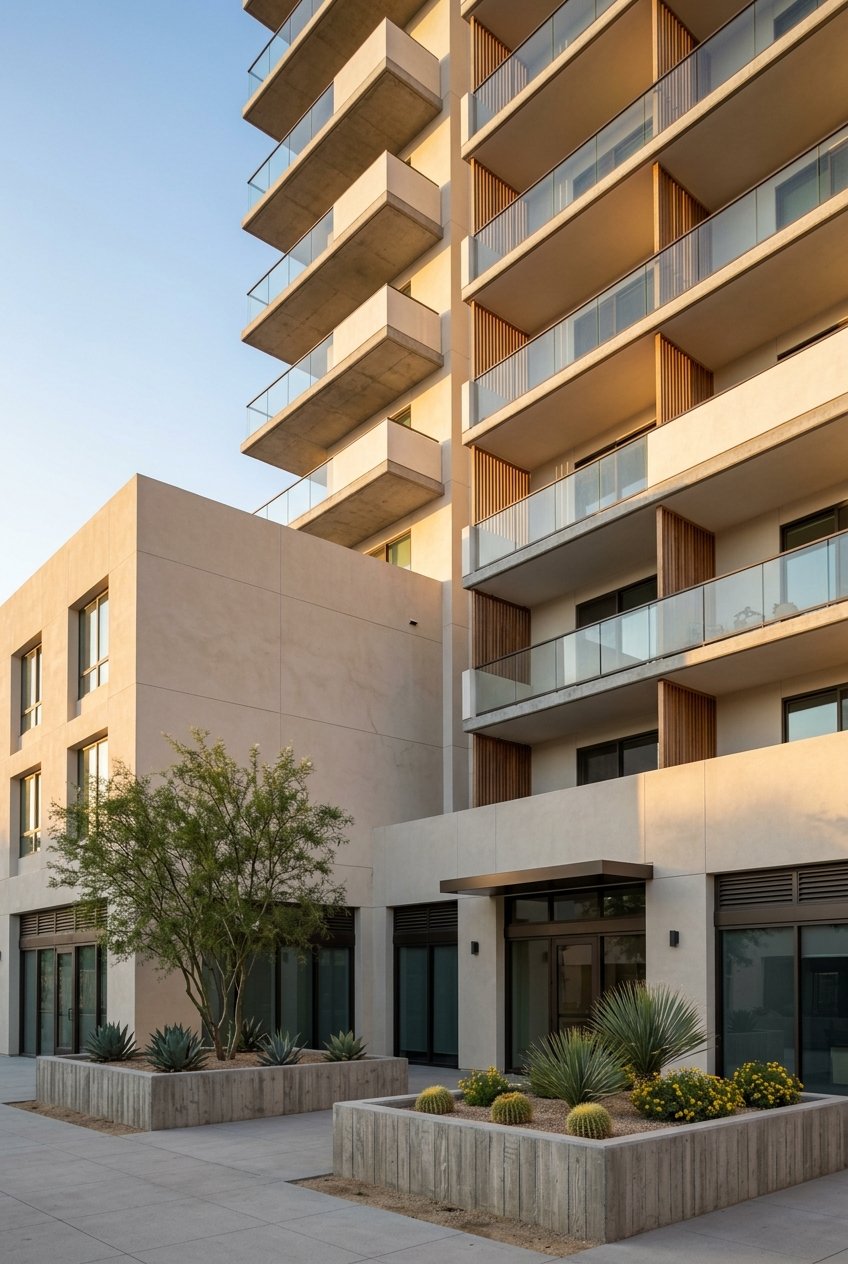
In Old Town, these labels are not just marketing terms. Scottsdale’s urban design guidance defines low-rise as 48 feet or less, mid-rise as more than 48 feet but less than 90 feet, and high-rise as 90 to 150 feet.
That means many buyers are really choosing between three scales, not two. You may be comparing a tower-style residence, a mid-rise urban condo, or a smaller low-rise or townhome-style property. Each one tends to create a different street feel, parking setup, and amenity mix.
High-Rise Living in Old Town Scottsdale
Amenities Are Often More Extensive
The biggest difference in many high-rise or larger-scale condo buildings is the amenity package. In Old Town, Optima Camelview Village advertises features like an indoor pool, outdoor putting green, racquetball and basketball courts, fitness and business centers, spa and sauna facilities, a party room with catering kitchen, boutiques and cafés, on-site concierge, and secure underground garage parking with elevators directly to the home.
If you want your building to function almost like a private resort, that kind of setup can be appealing. You may spend less time leaving the property for workouts, meetings, or relaxation because more of your daily routine is built in.
Views Usually Improve With Height
If broad views are high on your priority list, taller buildings often have the advantage. Scottsdale Waterfront Residences is identified in city records as condominium towers on East Camelback Road, showing the type of property where elevation is part of the living experience.
In practical terms, more height can mean a stronger sense of separation from street activity. It can also create a more dramatic visual experience, especially if you value skyline, mountain, or city-light views.
Lock-and-Leave Can Feel More Turnkey
High-rise living often appeals to second-home buyers and anyone who wants a streamlined routine. Buildings with secured parking, controlled access, elevators, and concierge-style services can make arrivals and departures feel simple and efficient.
That can be especially useful if you split time between cities or travel often. In many larger condo communities, more of the day-to-day building management happens behind the scenes, which can support a true lock-and-leave lifestyle.
Low-Rise Living in Old Town Scottsdale
The Feel Is Often More Grounded
Low-rise properties in Old Town tend to offer a different rhythm. Instead of a vertical tower experience, you are more likely to live closer to the street, a courtyard, or an alley-access garage arrangement.
Scottsdale’s planning guidance ties low-rise buildings to the more compact, lower-scale part of the Downtown Core. That often creates a living environment that feels more connected to the block and more residential in scale.
Design Can Still Be Polished and Convenient
Choosing low-rise does not mean giving up convenience. The approved 1st Street Townhomes project, for example, is a 12-unit, 45-foot-tall development with garage parking for every unit, front access from 1st Street, rear access from the alley, and a shared common area with shade trees, seating, and bike racks.
That example shows how smaller-scale living in Old Town can still feel thoughtfully designed. You may not get a long list of tower-style amenities, but you can still find practical features that support comfort and ease.
Access Often Feels More Direct
Many buyers prefer the simplicity of entering from a private garage, street-facing entry, or smaller shared space. In a low-rise setting, your arrival home may feel less like passing through a managed building and more like stepping into a residential pocket within Old Town.
For some people, that is a major lifestyle benefit. It can feel easier, more familiar, and less formal than a large condo tower.
Parking Matters More Than You Think
Old Town Parking Is an Active Issue
Parking is not a small detail in Old Town Scottsdale. The city notes that parking can be at a premium, and it continues to add capacity through projects like the Brown Avenue Parking Structure expansion and a new parking structure in the northeast quadrant of Old Town.
That tells you something important as a buyer. In this area, parking is part of daily quality of life, not just an afterthought for guests.
Building Type Shapes the Parking Experience
Scottsdale’s parking rules and design guidance help explain why high-rise and low-rise living can feel different. In Type 1 areas, parking should be accessed from an alley or adjacent side street, and structured parking is preferred below grade. Parking and garages are also expected to be screened from street and residential views.
In a high-rise, that often creates a more garage-centric, internal arrival experience. In a low-rise or townhome-style property, vehicles are usually pushed to the side or rear, which can make the street frontage feel more human-scaled.
Noise, Activity, and Micro-Location
Block Location Can Matter as Much as Height
Old Town’s appeal includes nightlife, events, and a busy entertainment scene. Scottsdale also has a Transportation Safety Zone in the downtown entertainment district to help relieve congestion, and the city enforces a special noise rule for certain alcohol-serving or live-entertainment businesses when noise disturbs nearby residential districts.
For you, the takeaway is simple: building height alone will not tell you how quiet a home feels. A low-rise home near a busy entertainment block may feel more active than a taller residence on a quieter edge of Old Town.
Street Position Changes Daily Life
When comparing properties, focus on the exact block, entry orientation, and surrounding uses. Ask yourself how close you want to be to restaurants, nightlife, and event traffic versus quieter edges and more controlled access points.
This is one of the biggest reasons in-person tours matter. In Old Town, two homes only a few blocks apart can deliver very different experiences.
Which Option Fits Your Lifestyle?
Choose High-Rise If You Want:
- A stronger amenity package
- More vertical views
- A more managed, service-oriented building environment
- Easier lock-and-leave living
- Secured garage and elevator-based access
Choose Low-Rise If You Want:
- A smaller building scale
- More direct street or alley access
- A more residential feel within Old Town
- Simpler common areas
- A home that aligns with Old Town’s lower-scale planning character
Do Not Overlook Mid-Rise Options
Because Scottsdale separates low-rise, mid-rise, and high-rise by height, some buyers find the sweet spot in the middle. A mid-rise property may offer a more urban condo lifestyle without the full tower feel.
If you are torn between the intimacy of low-rise and the convenience of high-rise, mid-rise inventory can be worth a closer look. It may give you a balance of access, views, and shared amenities.
A Smart Way to Decide
Before you choose, think through your real daily habits instead of just the building’s appearance. A beautiful tower may not be the best fit if you want quick direct access and a quieter block. A polished low-rise may not feel ideal if you want concierge-style convenience and a deeper amenity package.
A simple checklist can help:
- How often will you walk to dining or nightlife?
- How important are views to you?
- Do you want a full amenity building or a simpler setup?
- How much do you care about direct access versus elevator access?
- Are you buying for full-time living, part-time use, or a second home?
- How sensitive are you to event traffic and sound?
- How important is guest parking in your day-to-day life?
When you answer those questions honestly, the right fit usually becomes clearer.
If you are comparing condo towers, townhomes, or smaller residential buildings in Old Town Scottsdale, local context matters. The right choice is rarely about height alone. It is about how the building, the block, and your routine all work together. If you want help narrowing the options and matching them to the way you actually live, connect with Phoenix Living: Joelle Addante + David Thayer.
FAQs
What is considered a high-rise in Old Town Scottsdale?
- Scottsdale defines high-rise buildings in Old Town as 90 to 150 feet tall.
What is considered a low-rise in Old Town Scottsdale?
- Scottsdale defines low-rise buildings in Old Town as 48 feet or less.
Is parking difficult in Old Town Scottsdale?
- Parking can be at a premium in Old Town, and the city is continuing to add parking capacity through new projects.
Are high-rise condos in Old Town Scottsdale better for lock-and-leave living?
- They often can be, especially when a building includes secured parking, elevators, controlled access, and concierge-style services.
Are low-rise homes in Old Town Scottsdale quieter than high-rises?
- Not always. In Old Town, the exact block and nearby activity can matter as much as the building height.
Should I consider mid-rise buildings in Old Town Scottsdale?
- Yes. Scottsdale defines mid-rise as more than 48 feet but less than 90 feet, and it can offer a middle ground between tower living and lower-scale residential living.