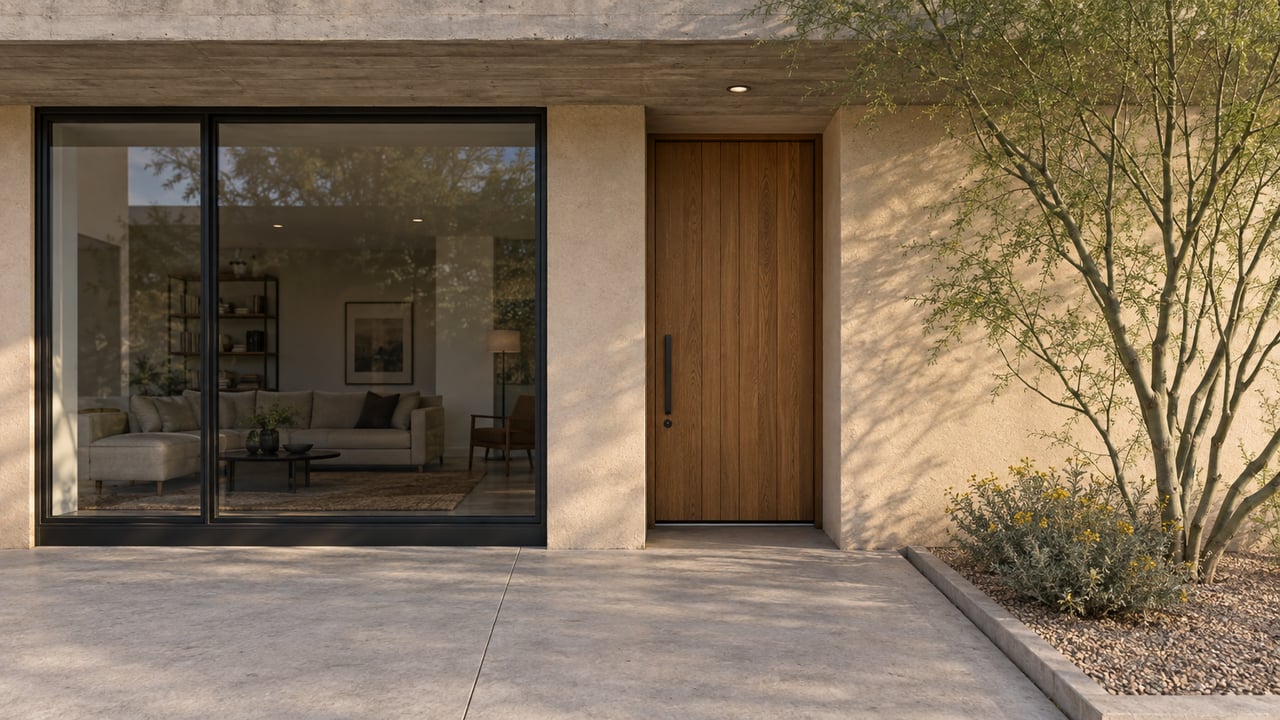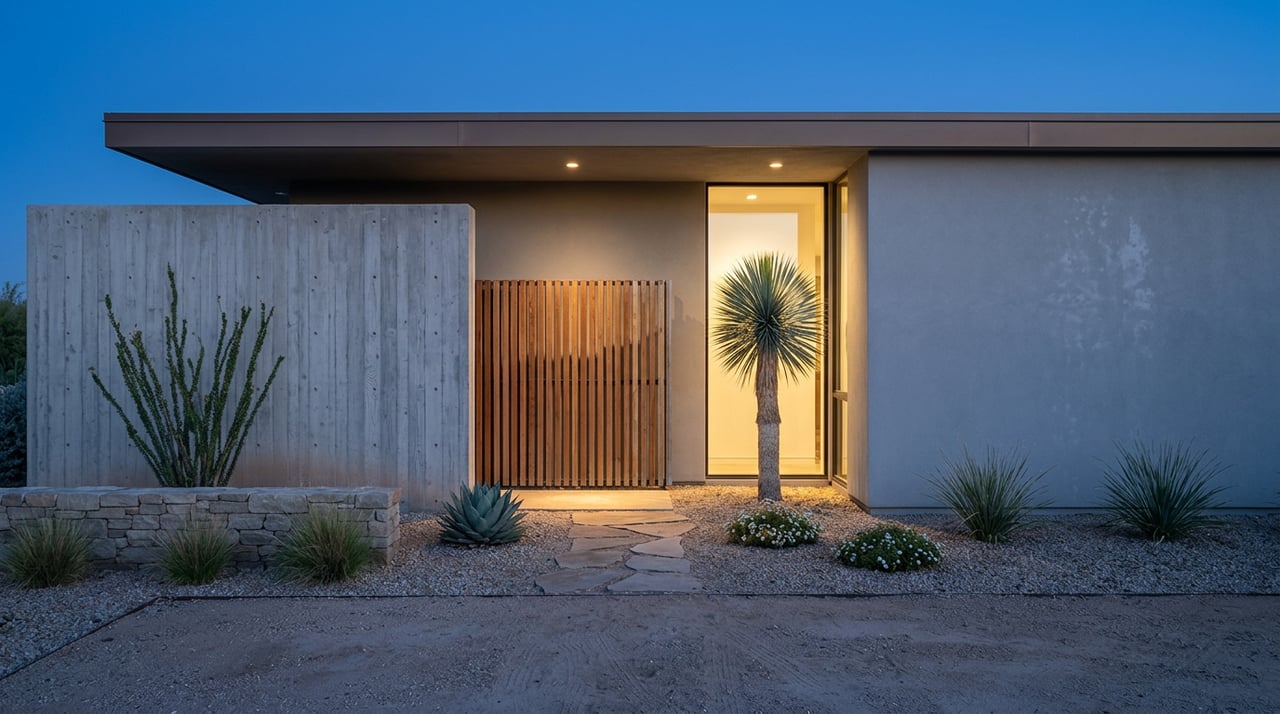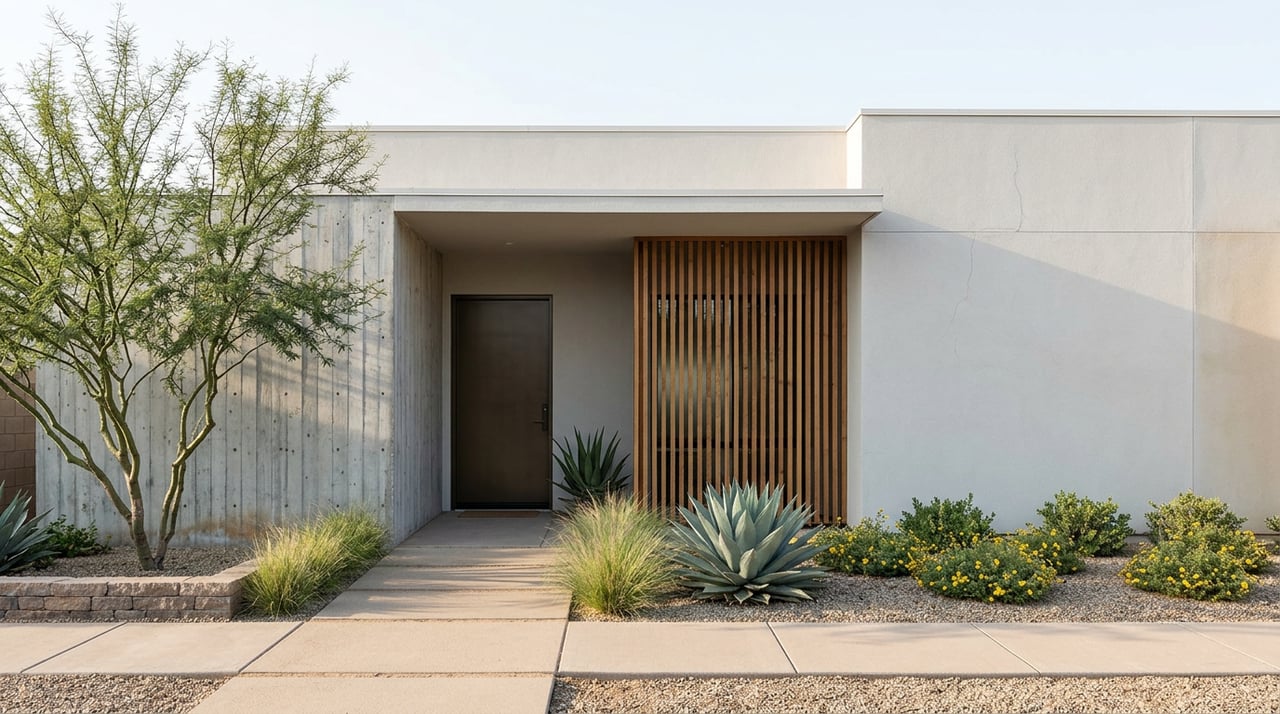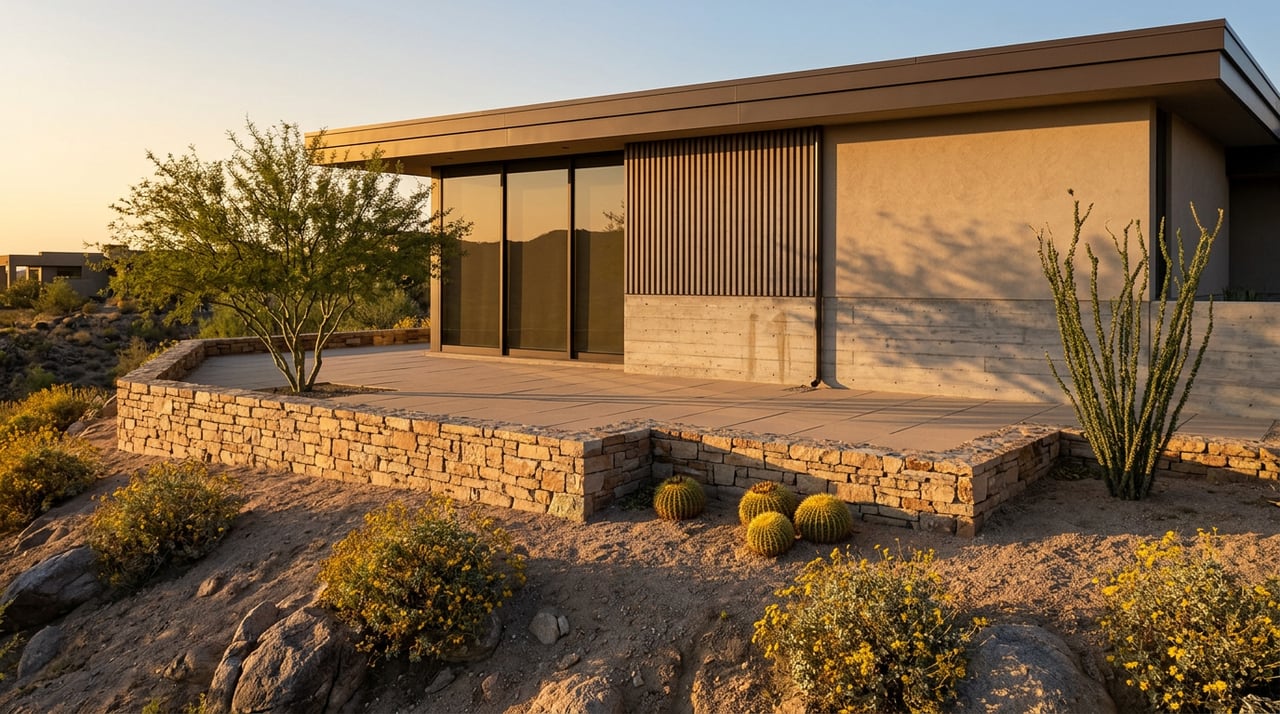
How much of a one-acre lot in Paradise Valley can you actually build on? The answer on the deed says one acre. The answer that matters, the one your architect will hand you after the site survey, might be closer to a tenth of that. Two lots can carry identical acreage on paper and produce two completely different homes, because the number that governs your build envelope in Paradise Valley isn't lot size. It's slope.
This catches people off guard at the worst possible moment: after they've written an offer, ordered plans, and started picturing where the pool goes. The fix is simple once you know where to look, but the town's rulebook doesn't advertise itself on a listing sheet.
The Table Nobody Reads Before Making an Offer
Paradise Valley's Hillside Development Regulations, laid out in Article XXII of the Town's Zoning Ordinance, exist to limit how much of a sloped lot you're allowed to disturb through grading, cutting, filling, or clearing. The rule applies to any parcel with a natural slope of 10 percent or more, and it scales down hard as the ground gets steeper.
Here's the sliding scale that decides how much of your acre you actually get to touch:
| Building-site slope | Allowed lot disturbance |
|---|---|
| 10% | Up to 60% |
| 15% | Roughly 34% |
| 25% | Roughly 13% |
| 50%+ | Single digits |
Run that against a real half-acre lot. At a gentle 10 percent slope, you can work with most of the site. At 25 percent, a slope that reads as "nice views, has a hillside" on a listing description, you're negotiating over roughly a twentieth of an acre of buildable, disturbable ground. Everything else has to stay in its natural state, cut off from the driveway, the pool, and the retaining walls that would otherwise eat into your footprint.
This isn't just a paperwork exercise. Unincorporated land in the wider Paradise Valley area, outside the Town's own boundary, answers to a parallel hillside standard under Section 1201 of the Maricopa County Zoning Ordinance, and county Board of Adjustment files show the same basic tension playing out lot by lot: a build that exceeds its disturbance envelope gets asked to shrink or reorient before it gets asked to seek an exception. Whichever version of the rule applies to a given parcel, Town, county, or Phoenix, the lesson is the same. The building envelope shrinks before the house plan does.
Height Follows Acreage, Not Ambition
Slope isn't the only variable working against a bigger-lot-equals-bigger-house assumption. Paradise Valley's height limits are tied directly to acreage, and they're lower than what buyers moving from Phoenix, Scottsdale, or Mesa are used to.
Under the Town's Article X height and area table, a lot smaller than 3 acres caps out at 24 feet. Get to 3 or 4 acres and you gain two feet, up to 26. Only parcels over 4 acres reach the 30-foot height allowed as a matter of course in neighboring cities. On the base R-43 district, which requires a full acre per home, that 24-foot ceiling applies no matter how flat or scenic the lot is.
Add a second story and the math tightens again. On an R-43 lot, going up a floor doubles the required side yard from 20 feet to 40 feet on each side. That's not a footnote. On a one-acre parcel, a decision to build a second story can quietly consume the width you were counting on for a motor court or side yard.
None of this is arbitrary. The Town's own stated purpose for the hillside article is to manage development intensity, protect the hillside environment, and support safety, and the acreage-based height table follows the same logic: bigger lots earn more vertical room because there's more land to absorb the visual and structural impact.
One Name, Three Rulebooks
There's a wrinkle here that trips up even careful buyers. "Paradise Valley" describes more ground than the incorporated Town. The Town of Paradise Valley, the one with the R-43 zoning and the Article XXII hillside table above, is its own municipality with its own Hillside Building Committee. A separate area often called Paradise Valley Village sits inside the City of Phoenix and answers to Phoenix's own zoning and hillside code instead. And unincorporated pockets in the surrounding area fall to Maricopa County's Section 1201 standard mentioned above, a third table entirely.
The practical effect: the disturbance percentages, the height caps, and the side-yard doubling described in this piece apply specifically to the incorporated Town of Paradise Valley. A hillside lot a few blocks away that reads "Paradise Valley" in casual conversation, in an address, or on a listing description could be governed by an entirely different code administered by a different building department. Before you run any of these numbers against a specific parcel, confirm which of the three actually holds jurisdiction over it.
The Other Number That Surfaces at Closing: Septic
Slope isn't the only place where the acreage on paper hides a transaction detail. A meaningful share of Paradise Valley properties, especially the larger estate lots that drew buyers to the town in the first place, run on private septic systems rather than municipal sewer. The Town itself notes that it has two sewer providers, City of Phoenix Water Services and a Town system operated by the City of Scottsdale, with coverage depending on where a parcel sits, and that many properties within the Town remain connected to septic instead of either sewer system.
That matters because Arizona law doesn't leave septic status as a casual disclosure item. Any property served by an on-site wastewater system needs a qualified inspector's Report of Inspection completed within six months before the sale closes, under Arizona Administrative Code R18-9-A316, and the seller has to hand that report to the buyer before closing. After the deal closes, the buyer still has a filing obligation with the county on a short clock.
The dollar cost of the inspection itself is usually a minor line item against a Paradise Valley price point, and it scales with tank size and access rather than home value. The real risk isn't the fee. It's timing. A six-month inspection window that lapses because a deal took longer than expected means starting the process over, right when a buyer expects to be closing.
What This Means Before You Write the Offer
Put the slope table, the height table, and the septic timeline together and a pattern emerges: in Paradise Valley, the number on the assessor's parcel record is a starting point, not a conclusion. Two questions belong on every offer worksheet before you get attached to a specific acreage figure.
First, what is this lot's actual slope, and what does that translate to in disturbable square footage? A topographic survey with a slope analysis, ordered before you fall in love with a listing's acreage, tells you what you're really negotiating for. Second, is this parcel on septic or sewer, and if it's septic, how recent is the seller's inspection report relative to your expected closing date?
Neither question shows up in a portal listing. Both show up in a due diligence period, and both can change a budget by tens of thousands of dollars in retaining walls, engineering, or septic work if they surface late.
A Few Questions We Hear Often
Does every Paradise Valley lot need a septic inspection before closing? Only if the parcel is served by an on-site wastewater system rather than municipal sewer. Checking the Town's sewer provider boundaries early tells you which category a specific address falls into.
Can I get a variance if slope limits my build? Hillside disturbance and setback variances go through a Board of Adjustment case by case, whether the parcel falls under the Town, the county, or Phoenix. Staff review tends to weigh a smaller or reoriented footprint against any request for added disturbance, so a variance is a possibility, not a guarantee.
Does the disturbance limit apply to driveways too? Driveway and utility connections are treated separately from the general disturbance cap under the Town's rules, though any disturbance beyond those specific uses still counts against the limit for the rest of the site.
If you're looking at a Paradise Valley lot and want someone to run the slope math, check the sewer provider map, and read the septic timeline against your closing date before you're three weeks into escrow, that's exactly the kind of groundwork Phoenix Living does before a client ever signs an offer. Reach out and let's look at the parcel together.