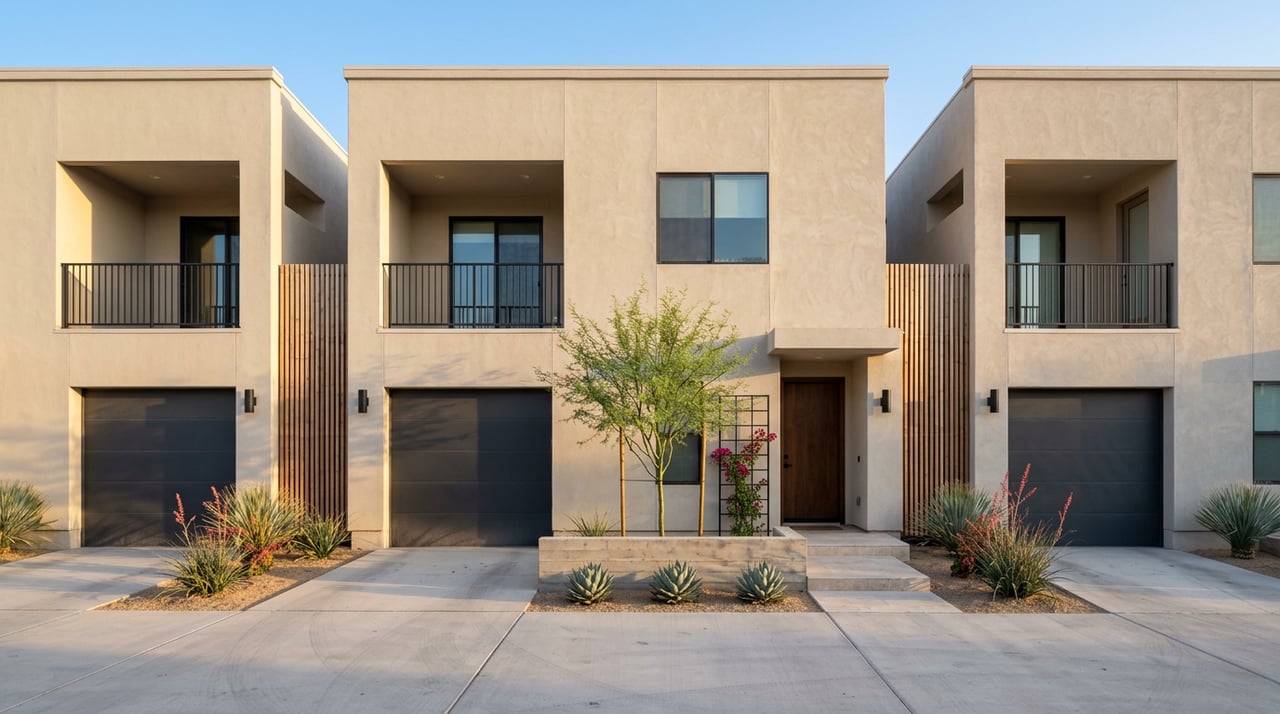
Trying to decide between a condo with resort-style amenities or a townhome with a private garage near Old Town Scottsdale? You are not alone. In a walkable, mixed-use area with lively dining, arts, and canal paths, both options can fit a lock-and-leave lifestyle or a need for more space and privacy. In this guide, you will learn the real differences in ownership, HOAs, amenities, parking, maintenance, financing, and short-term rental rules, plus get examples and a due-diligence checklist. Let’s dive in.
Old Town snapshot
Old Town is one of Scottsdale’s most walkable hubs, which makes attached living popular for full-time residents, second-home owners, and investors. Recent neighborhood snapshots show median sale prices in the mid six figures, with month-to-month variation based on inventory and unit mix. When you compare options, focus on true, like-for-like comps by building, floor, exposure, parking, and HOA scope. That will help you judge value more accurately than broad averages.
What you actually own
Condo basics in Arizona
In Arizona, a condominium is a legal form of ownership under the Arizona Condominium Act. You own an individual unit plus an undivided interest in common elements, and the association typically insures and maintains the building exterior and shared systems under a master policy. Treat “condo” as a legal framework with defined rights and obligations, not just a building style. You can read more about the statutory structure in this overview of Arizona’s Condominium Act from a legal journal summary: Arizona Condominium Act context.
Townhome can be fee-simple or condo
“Townhome” usually describes the look and layout, not the legal form. In Old Town, a townhome might be a fee-simple lot in a planned community, or it might be part of a condominium regime. The recorded documents decide who maintains roofs and exteriors and how streets and shared areas are managed. For a helpful summary of how Arizona treats condominiums vs planned communities, see this Arizona law overview.
Action step
Ask for the recorded declaration, plat, and CC&Rs early. Those documents answer key questions like: Do you own the lot and roof, or does the association? Who insures what? What rules apply to leasing?
HOA fees and what they cover
Condos: higher dues for broader coverage
Amenity-rich downtown condos often carry higher monthly dues because the association maintains more systems and services. Typical inclusions can be exterior and roof maintenance, garage operations, common utilities, a building master insurance policy, pools, fitness centers, and front desk or concierge. For example, listings at Optima Camelview show fee lines that include roof repair, exterior maintenance, and insurance, along with robust amenities; see a representative listing for the type of inclusions you might encounter: Optima Camelview example.
Townhomes: usually lower dues, more owner tasks
Many Old Town townhome communities have modest dues that cover landscaping, small community pools, and private streets or lighting. If the townhome is fee-simple, you often handle exterior and roof maintenance. If the townhome is part of a condo regime, the association may handle more. Always confirm in the CC&Rs.
Why fees vary so much
Fee differences come from amenity level, insurance scope, staff and concierge services, and whether utilities or cable are included. High-rise buildings with extensive amenities almost always cost more than smaller townhome clusters.
Amenities, privacy, and parking
Condo amenities
In Old Town’s core, condos commonly offer multiple pools and spas, fitness centers, secure package rooms, and assigned or underground parking. Some full-service buildings add concierge, club rooms, and rooftop spaces. These perks support a lock-and-leave lifestyle and can lift monthly dues.
Townhome amenities
Townhomes often deliver private 1 to 2 car garages, direct street access, patios or rooftop decks, and smaller community pools or courtyards. You typically trade large shared amenities for more private space and storage.
Privacy and noise
Condos have more shared walls, corridors, and elevators, which can add ambient noise. Townhomes usually have no one above you and more private outdoor areas, which many buyers perceive as quieter. In Old Town, block-by-block context matters. Units near nightlife corridors or facing major streets can experience higher noise regardless of property type.
Parking and guest logistics
- Condos: expect assigned or underground garage parking, sometimes valet. Guest parking varies by building.
- Townhomes: many offer private garages, which are a big win for storage and security. Some older clusters use carports or surface parking.
- City context: Old Town uses a shared-parking strategy that supports walkability, which can affect on-street and guest parking near event areas. If you host often, review guest parking policies and neighborhood supply. The city’s parking master plan provides useful context: Old Town parking plan.
Maintenance and insurance
Who fixes what
- Condos: associations usually maintain the building exterior, roof, shared mechanicals, and common areas. You insure interior finishes and personal property with an HO-6 policy.
- Townhomes: responsibilities vary. In fee-simple setups, you are more likely to handle exterior and roof, unless the CC&Rs say otherwise. If the townhome is a condo legal structure, the association may cover more.
Insurance layering
Associations carry a master policy for common areas and sometimes structural elements. You need an HO-6 for a condo unit or a homeowner’s policy for a fee-simple townhome to cover interiors, personal property, and liability. Ask your insurer about loss assessment coverage, which can help with your share of a master policy deductible. For a clear primer on the master policy and HO-6 relationship, review this guide: Condo insurance 101.
Reserves and special assessments
Healthy associations maintain reserves for capital items like roofs, elevators, and exterior surfaces. Weak reserves or big planned projects can lead to special assessments that raise your total carrying cost and affect resale. Review the budget, reserve study, and recent meeting minutes for signals of fee changes or looming projects. The Community Associations Institute provides useful owner-facing context on budgets and reserves: Association budget and reserves context.
Financing and resale
Financing differences
Condos can require project-level reviews for certain loan programs, including FHA and VA. Lenders look at owner occupancy, reserves, insurance, and litigation. Fee-simple townhomes often finance like single-family homes, but if a townhome is legally a condo, similar condo checks apply. If you will use FHA or VA, verify project eligibility early. This lender summary outlines key condo and PUD distinctions: Condo and PUD financing guide.
Resale demand
Old Town’s walkability, canal access, and proximity to restaurants and arts support steady buyer interest for both condos and townhomes. Building financials, reserves, insurance, and rental rules can influence liquidity for condos. Townhomes with private garages and fee-simple ownership often appeal to a broader set of buyers who want storage and more privacy. Location, parking, and outdoor space typically drive resale more than property type alone.
Short-term rentals in Old Town
If rental income is part of your plan, confirm the rules before you write an offer. Scottsdale requires a city license for rentals under 30 days and has safety, disclosure, and fee requirements. Associations can be stricter than the city and may prohibit or tightly restrict short-term rentals. Review both sets of rules and verify the unit’s eligibility here: Scottsdale short-term rental licensing.
Example communities to compare
These communities illustrate common trade-offs in Old Town. Always verify specifics in the recorded documents and current HOA disclosures.
- Condos, amenity-rich: Optima Camelview Village, Scottsdale Waterfront Residences, Safari Drive. Expect strong amenities, structured parking, and higher dues aligned with services.
- Townhomes, cluster and infill: Casa Granada and similar older clusters near the stadium corridors, boutique infill like The NINES, and mid-market townhomes along the 78th Street area. Expect more private space, garage options in many cases, and generally lower dues with fewer building-wide services.
How to choose: quick scenarios
- You travel often and want simple living. A condo with robust amenities and secure parking suits a lock-and-leave lifestyle.
- You want a private garage and more storage. A townhome with 1 to 2 car garage space and a patio or rooftop deck may fit best.
- You prefer lower monthly dues. A fee-simple townhome with modest HOA coverage can reduce recurring costs, but you may take on more exterior maintenance.
- You plan to use FHA or VA financing. Confirm a condo project’s approval early or consider a fee-simple townhome alternative.
- You are STR-focused. Verify both Scottsdale’s license requirements and the HOA’s leasing rules before you offer.
Buyer due-diligence checklist
Use this list during your inspection period and require documents by contract when possible.
- Recorded declaration, CC&Rs, and plat to confirm legal form and maintenance responsibilities. See an overview of Arizona’s condo statutes for context: Arizona Condominium Act context.
- HOA budget, latest financials, and reserve study to assess reserve health and fee stability. Owner resources: Association budget and reserves context.
- Recent meeting minutes for discussions about special assessments or major projects.
- Master insurance declarations and unit insurance requirements. A helpful primer is here: Condo insurance 101.
- Resale or estoppel certificate for current dues, delinquencies, and any special assessments. Arizona discussions on standardized disclosures appear here: Resale disclosure context.
- Leasing and STR rules at both levels: HOA and city. Start with the city’s page: Scottsdale short-term rental licensing.
- Financing checks if needed. Ask your lender about condo warrantability, FHA or VA approval, and project questionnaires: Condo and PUD financing guide.
- Parking and guest logistics. Confirm assigned spaces, guest policies, and nearby public supply; city context here: Old Town parking plan.
Next steps
Choosing between a condo and a townhome in Old Town comes down to how you want to live, what you want to maintain, and how you plan to finance or rent. If you value amenities and minimal upkeep, a condo can be ideal. If you want a private garage, more storage, and a bit more privacy, a townhome often wins. The right answer is the one that fits your lifestyle and budget once HOA scope, insurance, and financing are fully understood.
If you want a clear, side-by-side comparison for specific buildings and townhome clusters, we can help you line up true comps, review HOA documents, and coordinate financing checks. Reach out to Phoenix Living: Joelle Addante + David Thayer for local guidance and a tailored plan.
FAQs
What is the main legal difference between condos and townhomes in Scottsdale?
- A condominium is a legal ownership form where you own a unit plus an undivided share of common elements, while “townhome” is an architectural term that can be either fee-simple in a planned community or structured as a condo; your CC&Rs and plat confirm which rules apply.
How do condo HOA fees in Old Town compare to townhome dues?
- Amenity-rich condos often have higher dues because the association maintains exteriors, garages, and services like pools and fitness; many townhomes have lower dues that cover landscaping and small pools, with owners handling more exterior items.
Who maintains the roof and exterior in Old Town properties?
- In most condos, the association maintains exteriors and roofs; in fee-simple townhomes, owners usually do unless the CC&Rs assign that work to the HOA. Always verify in the recorded documents.
Are condos harder to finance than townhomes near Old Town Scottsdale?
- Condos can require project-level approval for some loans and may face lender scrutiny on reserves, insurance, and litigation, while fee-simple townhomes typically finance like single-family homes; confirm details with your lender early.
Can I short-term rent a condo or townhome in Old Town?
- Scottsdale requires a city license for rentals under 30 days and sets safety and disclosure rules, and your HOA can be stricter or prohibit STRs entirely; check both the city rules and the HOA’s leasing provisions before you buy.