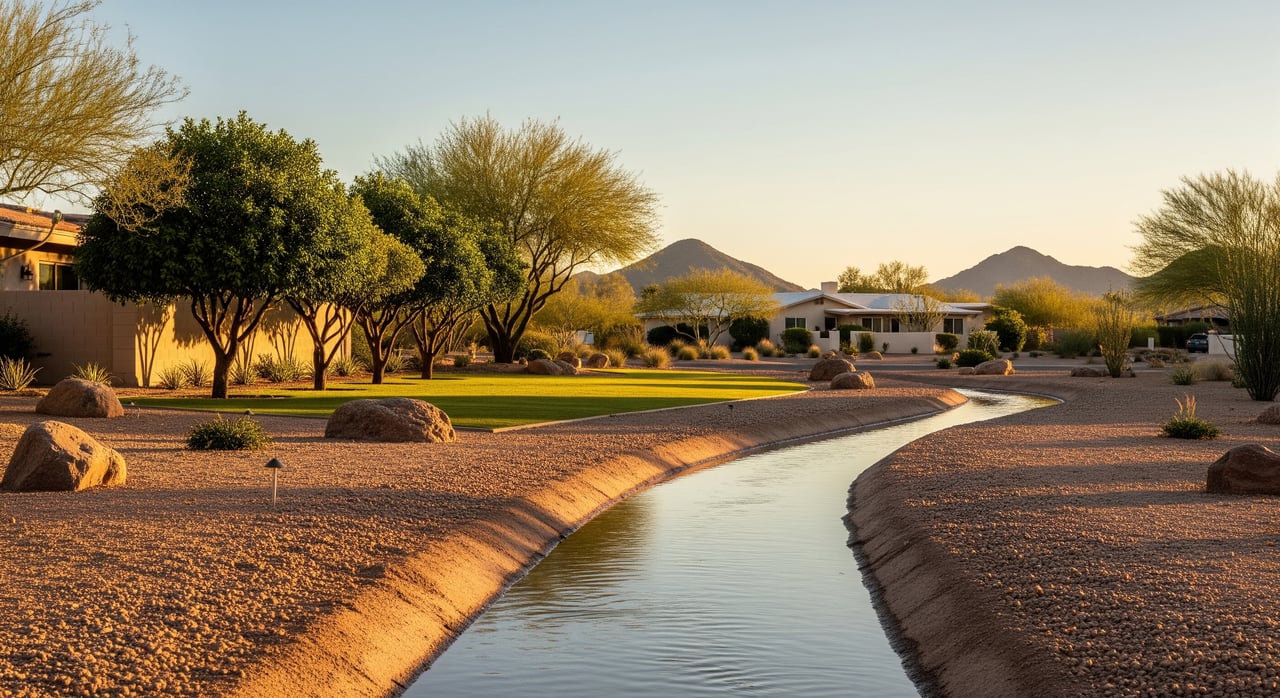
Thinking about buying or selling a home in Arcadia and wondering how those lush lawns and mature citrus trees stay so green in the desert? The answer is often SRP flood irrigation, a unique feature that sets Arcadia apart. You want the charm and shade without surprise costs or maintenance headaches. This guide breaks down how flood irrigation works, what it costs, and how to manage it with confidence as a buyer or seller. Let’s dive in.
What SRP flood irrigation means in Arcadia
In many older Arcadia streets, yards are irrigated with non-potable canal water from the Salt River Project (SRP). Water moves from main canals into neighborhood laterals, then reaches individual lots through a small gate or box. Once it enters your property, it spreads across the yard by gravity through shallow channels or piping.
This canal water is not treated to drinking standards. It is for outdoor use only. Your potable (drinking) water system must remain completely separate. Backflow prevention is required by local plumbing codes to prevent cross-connection between irrigation and household water lines.
Flood irrigation helped Arcadia flourish with large lots and mature trees. It remains a defining neighborhood feature that supports shade, cooling, and curb appeal.
How water gets to your yard
Delivery points and on-site components
- SRP canals and laterals bring water to your block.
- Your lot receives water at a turnout or headgate, often in a metal or concrete box near the curb or property edge.
- Water may move through open swales, shallow earthen channels, or PVC pipes across the yard.
- Drainage features such as swales, french drains, or storm inlets guide excess water off the lot.
Some properties use pumps or pressurized laterals when the site’s elevation or layout requires it.
Who controls what
SRP and local canal operators control main canal flows and can open or close primary gates. You control your on-site turnout and how water moves across your yard. In some tracts, an HOA, ditch company, or neighborhood operator manages a shared turnout or schedules the sequence for several homes.
Seasonal schedules and timing
Flood irrigation is seasonal and weather-sensitive. In hot months, owners often irrigate more frequently and may run water until soils are fully saturated. In cooler seasons, irrigation is reduced or paused. Supply can change during drought, maintenance, or canal work, so schedules may be adjusted, rotated, or temporarily suspended. Always confirm current delivery windows with SRP or your local operator.
Water quality and filtration
Canal water can carry sediment, organic material, and algae. Many owners install strainers or filters near the turnout to protect downstream valves, sprinklers, and drip lines from clogging. Plan for occasional cleaning and flushing to maintain steady performance.
Safety, permits, and changes
Local plumbing and public health rules require backflow protection and strict separation from potable systems. If you plan to alter a turnout, relocate a gate, or make changes within an easement or right-of-way, you will likely need SRP and city approvals and inspections.
What it costs
Costs vary by parcel, account type, and neighborhood. Ask the seller for documentation and verify details with SRP and any local canal or ditch company.
- SRP charges and assessments: Some properties have irrigation assessments or service charges, often tied to long-standing delivery rights. Billing models differ from metered potable systems. Request copies of the property’s SRP irrigation account and any recent statements.
- Local canal or HOA fees: Certain neighborhoods assess fees to maintain laterals, gates, and shared infrastructure. These are commonly annual or periodic.
- On-site upkeep: Expect routine maintenance such as clearing sediment, repairing headgates or valves, cleaning swales, addressing minor erosion, and managing tree roots. Equipment purchases may include filters, replacement valves, pumps (if needed), automation, and backflow assemblies.
- Landscape maintenance: Mowing, grading touch-ups, and mosquito control may be necessary if standing water occurs.
- Potable water offset: Canal water can reduce your potable water usage for turf and trees, which may lower a portion of your city water bill. Actual savings depend on how much irrigation you would otherwise run with potable water and your local rates.
- Conversion costs: If you choose to move away from flood irrigation, plan for new irrigation lines, grading changes, plant replacements, and any SRP or city approvals to cap or remove a turnout.
Landscape benefits and tradeoffs
Flood irrigation supports what Arcadia is known for: large turf areas and mature shade trees like citrus, ficus, olive, and palms. These landscapes create cooling microclimates, comfort, and strong curb appeal.
There are tradeoffs. You will need to inspect turnouts, valves, and drainage consistently. Flood flows can erode soil and create uneven spots if grading is not maintained. Sediment and algae may collect, which means filters and occasional cleaning. Standing water can attract mosquitoes, so good scheduling and drainage are important. Overwatering can stress certain species and promote root problems. Mature roots can intrude into channels or pipes, so root management may be part of your routine.
Soils also change over time with flood irrigation. Periodic soil testing and amendments such as gypsum and organic matter can improve infiltration and plant health.
Design tips for Arcadia yards
Many owners choose a hybrid strategy. Keep the cooling benefits of irrigated turf and key trees in core areas where you live and entertain. Convert borders, slopes, or low-traffic zones to water-efficient plantings with drip irrigation. Select turf and plants that perform well in the Phoenix climate and can tolerate canal water. Local Cooperative Extension and master gardener resources provide guidance on species selection and best practices.
Buyer checklist for Arcadia irrigated lots
Use this quick list during due diligence:
- Confirm irrigation access: Ask whether the property has an SRP irrigation delivery or turnout. Request photos, account details, and any recent assessments.
- Locate the turnout: Identify where the gate or box sits and whether it lies within the lot, an easement, or a public right-of-way. Ask about any lateral or ditch easements on title.
- Review local assessments: Request recent statements from the ditch company, HOA, or irrigation district if applicable.
- Inspect on-site equipment: Verify valves, filters, backflow devices, pumps, and any automation. Ask for maintenance records.
- Evaluate drainage: Look for evidence of standing water, erosion, or grading issues near the home, patios, and shared property lines.
- Check for notices: Ask about recent SRP or municipal notices, restrictions, or schedule changes. Contact SRP or the local operator for current delivery status.
- Consider a pro inspection: Hire a licensed irrigation contractor familiar with SRP systems to review the turnout, piping, valves, and grading.
Seller checklist and disclosure tips
Help buyers feel confident about your irrigation system:
- Disclose the system: Provide details on the SRP turnout, account information, and any assessments or neighborhood fees.
- Document operations: Share your typical schedule, how to open and close the gate or valve, and any operating tips.
- Provide records: Include maintenance logs for filters, valve repairs, and backflow test results.
- Share permits and updates: If you converted areas to drip or capped a turnout, provide permits or approval documents.
- Set expectations: Highlight the cooling benefits and mature trees while noting ongoing maintenance so buyers understand the commitment.
Operating basics on day one
If you close on an Arcadia home with flood irrigation, start here:
- Find the turnout and confirm it operates smoothly. Clean debris and verify the gate or valve opens and closes without sticking.
- Identify flow paths and drainage. Walk the yard to ensure channels are clear and water moves away from the foundation.
- Check filters and backflow devices. Service or replace parts as needed.
- Test a short run. Observe how water spreads and where it drains, then adjust grading or add small berms for even coverage.
- Set a seasonal plan. During hotter months, irrigate more frequently and adjust duration to saturate the soil without leaving water standing for long periods.
- Keep simple records. Note dates, durations, and any maintenance to fine-tune your schedule over time.
Resilience during drought or maintenance outages
Canal deliveries can be reduced or temporarily paused during drought or canal maintenance. Build resilience with a hybrid landscape, efficient drip zones for key plants, and grading that supports healthy soil infiltration. Consider a contingency plan using potable irrigation for high-value trees if deliveries are interrupted, while still complying with backflow and cross-connection rules.
Who to contact for authoritative guidance
- Salt River Project (SRP) for canal operations, account status, and irrigation policies.
- Your local canal or ditch company or HOA for lateral maintenance and assessments.
- City of Phoenix Water Services and Building/Plumbing Departments for backflow, cross-connection, and permitting requirements.
- Maricopa County Flood Control and Environmental Health for drainage, stormwater, and mosquito control guidance.
- Arizona Department of Water Resources for statewide water management and drought policy.
- University of Arizona Cooperative Extension and local Master Gardener programs for plant selection and irrigation best practices.
- Licensed irrigation contractors experienced with SRP systems for inspections, repairs, and upgrades.
When you understand the system, flood irrigation becomes a practical way to keep Arcadia’s signature landscapes thriving. If you are weighing a purchase, prepping to sell, or considering a hybrid redesign, we can help you make smart, cost-conscious choices that protect value and enhance daily living.
Ready to talk through your specific property or plans? Reach out to Phoenix Living: Joelle Addante + David Thayer for local guidance and a clear next step.
FAQs
How SRP flood irrigation works in Arcadia
- Canal water from SRP reaches your lot at a turnout or gate, then spreads across the yard by gravity through swales or pipes and exits via drainage.
Safety of canal water for household use
- The water is non-potable and not for drinking; keep systems separated and maintain required backflow protection per local plumbing codes.
Typical flood irrigation frequency in summer
- It varies by weather, soil, and owner preference; many irrigate more often in hot months and reduce or pause in cooler seasons—confirm delivery windows with SRP.
Using canal water for sprinklers or drip lines
- Yes, if you add filters to handle sediment, avoid cross-connections, and comply with backflow and code requirements for any connected systems.
Managing standing water and mosquitoes
- Improve drainage, adjust run times to reduce standing water, and keep swales and inlets clear to minimize mosquito risk.
Budgeting for flood irrigation costs
- Plan for SRP or local assessments plus on-site upkeep (filters, valves, backflow tests, grading repairs) and routine landscape maintenance.
Converting away from flood irrigation
- You can convert to drip, xeric, or other systems, but expect permits or approvals, costs to cap turnouts, new irrigation lines, regrading, and plant changes.
Moving or modifying a turnout or gate
- Changes within easements or rights-of-way typically require SRP and city approvals and may involve inspections and coordination with local operators.